
For years, the security conversation for a small business started and ended with antivirus. You installed it, it scanned for known bad files, and everyone moved on. That model is quietly being retired, and not because a vendor decided you needed something new to buy. Two forces from outside the security industry are driving the change: the companies that insure you against a breach, and the frameworks that govern how you handle sensitive data.
Both have landed on the same conclusion. Detecting a threat is no longer enough. You have to be able to respond to it quickly, and prove that you did. That is the job Endpoint Detection and Response, or EDR, was built to do.
This post walks through what EDR actually is, how the managed version differs from software you run yourself, and why it now sits at the center of two conversations most owners would rather avoid: renewing cyber insurance, and passing a compliance review. I will keep the fear-mongering out of it. The threats are real, but the point here is what to do about them.
What EDR Actually Does
Traditional antivirus works from a list. It compares files on your computer against a catalog of known malware signatures. If a file matches, it gets quarantined. If it does not match, it passes. That approach still catches commodity threats, but it has a blind spot: anything new, or anything that does not look like a file at all.
Modern attacks live in that blind spot. Instead of dropping an obvious malicious program, an intruder uses the tools already on the machine. They run built-in scripting utilities, abuse legitimate administrative software, steal credentials, and log in like an employee. Nothing on the list matches, because nothing on the list was supposed to. Security professionals call this living off the land, and signature-based antivirus rarely sees it coming.
EDR takes a different approach. Rather than asking whether a file is on the bad list, it watches behavior. It records what processes run, what they connect to, how they chain together, and whether that pattern makes sense. When a sequence looks like an attacker rather than an employee, EDR flags it, and in a well-configured deployment it can isolate the affected machine from the network before the problem spreads.
That last part is the response in Endpoint Detection and Response, and it is the piece antivirus never had. Detection tells you something is wrong. Response does something about it. Insurers and auditors have both figured out that the second half is where breaches are won or lost.
The short version: antivirus asks whether a file is on a list of known threats. EDR watches how software behaves and can step in when the behavior looks like an attack. One is a filter. The other is a witness that can also pull the alarm.
The Difference Between EDR and Managed EDR
Here is the part most articles skip. EDR is a tool. A capable one, but still a tool, and a tool only helps if someone is watching it.
This is where small businesses run into trouble. A raw EDR platform generates alerts around the clock. Some are real, many are noise, and telling them apart takes trained eyes and time. If those alerts land in an inbox nobody checks at 2 a.m. on a Saturday, the tool has technically done its job while the business still gets breached. Attackers know this. They pick nights, weekends, and holidays precisely because that is when the humans are gone.
Managed EDR closes that gap. Instead of shipping you software and wishing you luck, it pairs the technology with a security operations center staffed by real analysts, every hour of every day. When the platform detects something suspicious, a person reviews it. They confirm whether it is an actual threat or a false alarm, and when it is real, they act: isolating the endpoint, stopping the malicious process, and handing over clear remediation steps instead of a cryptic alert code.
That human layer changes the math in a few specific ways. False positives get filtered out before they reach you, so you are not drowning in alerts you cannot interpret. Threats that only reveal themselves through subtle behavior, like an attacker quietly establishing a way back into your network, get caught by people who know what to look for. And the response happens in minutes, not whenever someone eventually notices.
For a small business without a dedicated security team, and that describes most of the medical practices, law firms, and service companies we work with around Orlando, managed EDR is the difference between owning a smoke detector and having a fire department on call.
What Your Cyber Insurer Now Expects
If you have renewed a cyber insurance policy in the last two years, you have felt this shift. The application used to be a page. Now it reads like a security audit, and endpoint protection is one of the first things underwriters check.
The requirement is specific, and it is worth understanding exactly what carriers want. They are looking for next-generation endpoint protection with behavioral detection, containment capability, and 24/7 alerting, delivered either by an in-house team or through a managed detection and response provider. Coverage has to include servers and workstations, not just a handful of machines. And here is the part that trips people up: legacy antivirus does not qualify, regardless of the brand name on it. If your application lists a signature-based product where the carrier expects EDR, that is a gap, and increasingly it is one that gets your application rejected or your premium raised.
The stakes are not abstract. Industry research from Marsh McLennan has found that a large share of cyber applications get denied on first submission, with missing multi-factor authentication and inadequate endpoint protection among the top reasons. Carriers have raised premiums significantly for businesses missing basic controls. The reason is simple economics: insurers price from real claims data, and the data showed them which controls actually limit losses. EDR earned its place on that list.
There is a second requirement that managed EDR handles almost as a byproduct: evidence. Modern applications do not accept a verbal yes. Underwriters ask for proof. They want a coverage report showing agents installed and healthy across your devices, alert metrics from the last 30 to 90 days, and for managed services, monthly summary reports from the provider. A managed EDR service produces exactly this documentation without you assembling it by hand. When renewal season arrives, having that package ready speeds up approval and gives you leverage to negotiate better terms.
| What underwriters ask for | What managed EDR provides |
| Behavioral detection, not just signatures | Continuous behavioral monitoring on every covered endpoint |
| 24/7 alerting and response | A security operations center reviewing detections around the clock |
| Containment capability | Host isolation that cuts a compromised machine off from the network |
| Coverage across servers and workstations | Agents deployed and health-monitored across the whole fleet |
| Evidence that the control is real | Coverage reports and alert metrics ready to attach to the application |
One point on framing, because it matters. Insurance is risk transfer, not a substitute for security. The goal is not to check a box so a carrier will cover you. It is that the same controls which satisfy the underwriter are the ones that actually keep you from filing a claim in the first place. The insurance requirement is just the market catching up to what already works.
Where EDR Meets Compliance
Cyber insurance is the market pushing you toward EDR. Regulation is the other force, and depending on your industry it may push harder.
The pattern across every major framework is the same: detection alone is no longer treated as sufficient. You are expected to detect suspicious activity, respond to it, and be able to show your work.
For healthcare, this direction is unmistakable. The current HIPAA Security Rule already requires covered entities and their business associates to record and examine activity in systems that hold protected health information. Federal guidance on that requirement makes a point worth repeating: passive logging that nobody reviews does not satisfy it. Collecting data is not the same as watching it. Beyond the current rule, the Office for Civil Rights has proposed a significant update to the Security Rule, published in the Federal Register in January 2025, whose provisions include explicit anti-malware deployment and continuous monitoring of systems for anomalous activity.
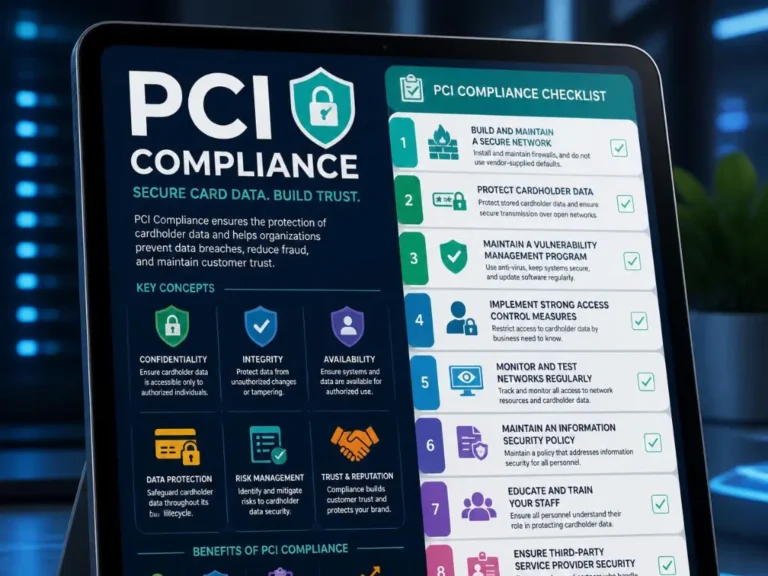
Other frameworks have already codified the same idea. PCI DSS 4.0, which applies to any business that processes card payments, requires under Requirement 10.7 that failures of security controls be detected and responded to promptly. NIST SP 800-171, which governs contractors handling controlled information for the federal government, requires both continuous monitoring and malicious code protection, and its latest revision emphasizes active response rather than detection alone. For the law firms we work with, client and court expectations increasingly mirror these same standards even where no single regulation names them.
Notice what all of these have in common. They do not ask whether you have antivirus. They ask whether you can detect a threat, respond to it, and demonstrate that the capability exists and works. That is a description of EDR, and specifically of managed EDR, where the respond and demonstrate parts are handled by people and produce records. At this point, a framework reviewer and a cyber underwriter are asking for nearly the same thing.
| A note on timing: the strengthened HIPAA Security Rule described above was proposed by HHS in January 2025 and has not been finalized. Treat it as a strong signal of where requirements are heading, not as a current mandate. The existing Security Rule, with its audit and review obligations, remains in effect today. |
Faster Containment Means a Smaller Problem
There is a practical advantage underneath the insurance and compliance requirements, and it is the reason both exist. The longer an intruder operates inside your network, the more damage they do and the more expensive the cleanup becomes. Breach costs remain high; the IBM Cost of a Data Breach research has put the global average in the millions of dollars, and while a small business will not see figures that large, the proportional hit can still be severe.
The value of EDR, and especially managed EDR, is that it compresses the window between intrusion and response. When an analyst isolates a compromised machine within minutes of the first suspicious behavior, the attacker never gets the chance to spread across the network, reach your backups, or copy out a database. A contained incident on one workstation is an inconvenience. The same intrusion left to run for days becomes a reportable breach, a notification obligation, an insurance claim, and a compliance investigation, all at once. EDR is what keeps the first scenario from turning into the second.
What to Look For
If you are weighing endpoint protection, whether for an insurance renewal, a compliance requirement, or plain good sense, here is what actually matters. I have kept this to the things that change outcomes, not a feature checklist.
- 24/7 human monitoring. The technology matters less than whether a trained person sees the alert at 3 a.m. Ask specifically whether a security operations center reviews detections around the clock, or whether alerts simply land in your own queue.
- Real response, not just notification. Confirm the service can isolate an endpoint and stop a threat, not only tell you one exists. Detection without response is half a product.
- Behavioral detection. The whole point of EDR is catching what signatures miss. Make sure coverage extends to fileless attacks and misused legitimate tools, not just known malware.
- Filtered alerts. A service that forwards every raw alert is handing you its workload. The value of a managed layer is that experts separate real threats from noise before anything reaches you.
- Reporting you can hand to an underwriter or auditor. Ask to see a sample coverage report and alert summary. If you cannot easily produce evidence of the control, you will feel it at renewal and at audit time.
None of this requires you to become a security expert. It requires asking whether the thing detecting threats can also respond to them, and whether a human is in the loop when it counts.
The Bottom Line
Antivirus was built for a threat landscape that no longer exists. The attacks small businesses face now do not announce themselves with a file on a known-bad list. They blend in, move quietly, and count on nobody watching closely enough to notice. Endpoint Detection and Response was built for that reality, and the managed version puts trained people behind the technology so that detection actually turns into response.
The reason this has become urgent is not that we are trying to sell you on a threat. It is that the two institutions with the most at stake in your security, the carrier that insures you and the framework that governs your data, independently reached the same conclusion. They want detection, response, and proof. Managed EDR delivers all three, and it does so quietly in the background, which is exactly where good security belongs.
At Harmony MSP, security is not an upgrade we tier you into later. It is part of how we run every engagement from day one. If you would like to talk through where your current endpoint protection stands, give us a ring (407) 720-6540.